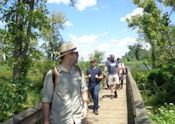
On the lovely, warm, sunny day of August 8, 2015, I led 19 ecology students and professional ecologists and one child for a too-abbreviated visit to the Dyke Marsh Wildlife Preserve (DMWP), as part of the special 100th anniversary meeting of the Ecological Society of America being held at the Baltimore Convention Center.
Pollinators visit flowers for nectar and pollen and when visiting flowers, they move pollen from one flower to another of the same species to produce fertile seeds. Most flowering plants are pollinated by bats, bees, butterflies, flies, beetles, and other animals. Plants can also be pollinated by wind and water and self-pollinate.
Animal pollinators face many challenges, including pollution, pesticides, habitat loss, invasive plants, disease, parasites and climate change.
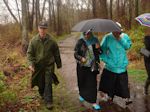 On April 14, 2015, FODM and the National Park Service led a group of Iraqi officials and scientists on a walking tour of Dyke Marsh. FODM is honored to have had these visitors. FODM president Glenda Booth has written an article that was published in the April 22, 2015 Mount Vernon Voice newspaper. Click here to view the photos and read the entire article.
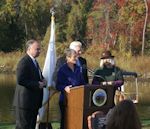
U.S. Secretary of Interior Sally Jewell on October 24 announced a grant of $25 million to the National Park Service to restore Dyke Marsh, which is eroding six to eight feet a year. The funds are part of the Obama Administration's Hurricane Sandy Rebuilding Strategy and Climate Action Plan to build resilience by restoring natural features along shorelines and protect communities from future storms.
Dyke Marsh restoration is one of 25 projects that DOI selected for funding out of 94 submitted.
Click here for a video of Secretary Jewell's visit to Dyke Marsh.
Producers of This American Land chose the Dyke Marsh Wildlife Preserve as one of America's little known but special places. We agree. View a video of it.