On February 26, 2017, Patrice Neilsen gave a presentation on her research on secretive bird species of the Washington, D.C., region. She studied the king rail, Virginia rail, sora, least bittern and American bittern in surveys at 51 points in 25 marshes in 2013, 2014 and 2015. She surveyed at sunrise or sunset three times a year. She found no Virginia rails, sora or American bittern, but found least bitterns and king rails in several locations.
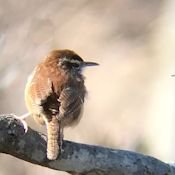
Carolina wrens (Thryothorus ludovicianus) delight us year-round with their rich musical song. They are common in surburbia and in the undergrowth of deciduous and mixed woods and along forest edges. Jason Yee shared his photographs of these beautiful birds, photos he took on the February 5, 2017, FODM bird walk.
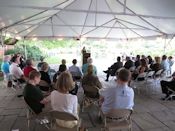
On October 2, 2016, 125 friends and supporters of the Dyke Marsh Wildlife Preserve (photo by Ned Stone) celebrated the 40th anniversary of the Friends of Dyke Marsh, the 100th anniversary of the U.S. National Park Service and the start of marsh restoration. FODM thanks the many generous members, friends, volunteers, sponsors and donors who made the celebration possible. See the lists below.

At FODM’s October 2, 2016, 40th anniversary celebration, Virginia Senators Adam Ebbin and Scott Surovell and Delegates Paul Krizek, Mark Levine and Mark Sickles presented a resolution honoring FODM’s 40 years of stewardship. The Virginia General Assembly (building, photo) passed the resolution on March 10, 2016.
Beginning in 2000 and for several years since, Fairfax County has sprayed over thousands of acres targeting a native moth caterpillar called the fall cankerworm (Alsophila pometaria). The National Park Service does not spray its properties, but a phenomenon known as “pesticide drift” can occur and chemicals can end up on unintended properties. We estimate that at least 110 kinds of butterfly and moth caterpillars are at risk of being killed by this insecticide.